Peshawari, Mojari or Kolhapuri? A Delhi Guide to Men's Ethnic Footwear
Every October, the same conversation happens across the counter at our Connaught Place shop. A man walks in three days before a wedding, holds up his phone with a photo of a sherwani, and says: "Bhaiya, kuch ethnic chahiye."
And then we ask which kind, and he goes quiet.
Because "ethnic footwear" isn't one thing. Peshawaris, mojaris and Kolhapuris are three completely different shoes, from three different places, built for three different jobs. They sit next to each other on our shelves and they photograph almost identically online — which is exactly why so many men end up buying the wrong one and blaming their feet.
Forty-six years of fitting these has taught us the difference matters. Here it is, without the Instagram poetry.
The Peshawari: The Workhorse of Indian Wedding Season
If you only own one pair of ethnic footwear, make it this one.
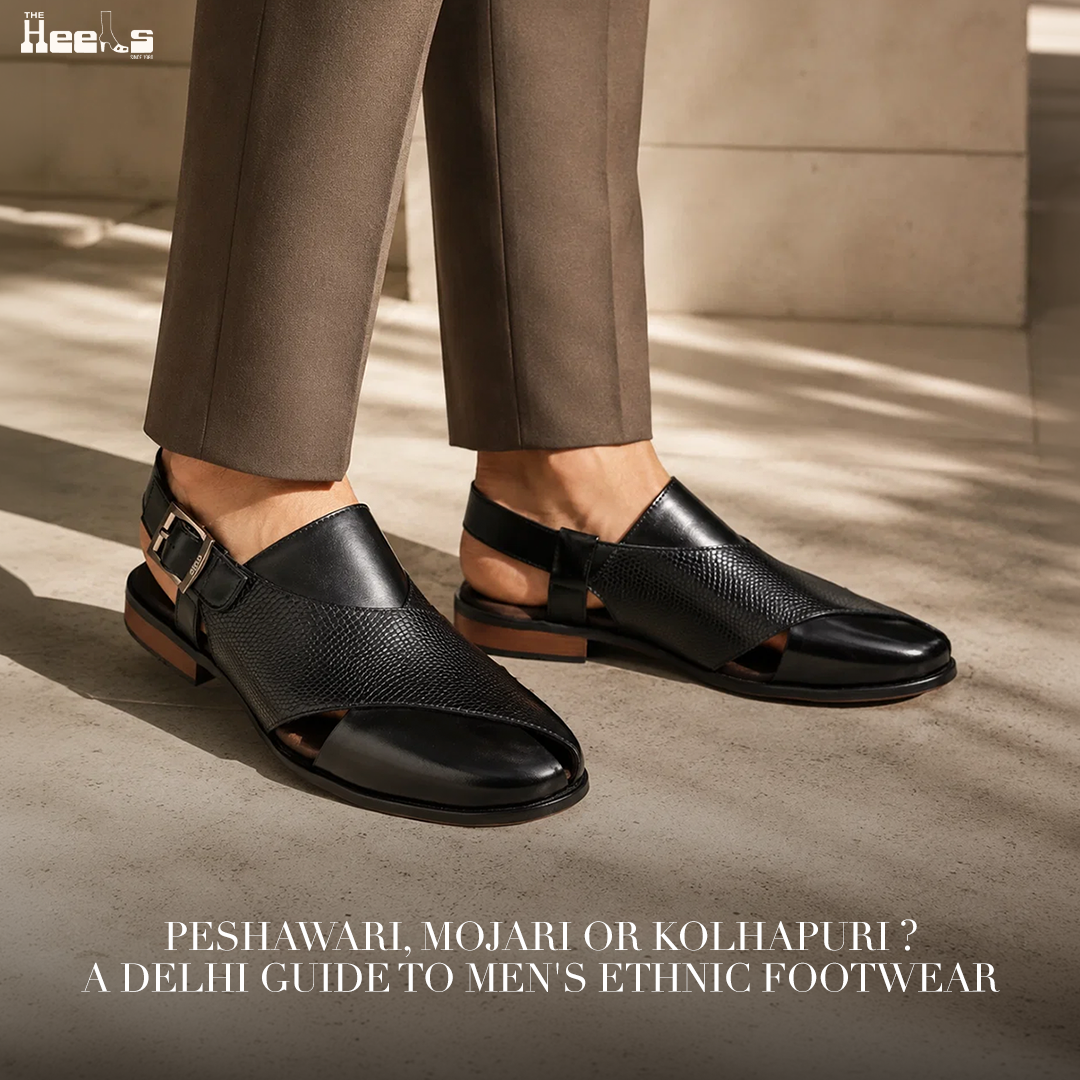
Peshawaris come from Peshawar, and the design has barely changed in a century for a good reason — it works. Two broad leather straps crossing over the front of the foot, an open back, a flat sole. No laces, no buckles, nothing to dig in. You step in and you're done.
What makes them the default choice for Indian weddings is that they're the only ethnic style that genuinely holds up across a five-hour function. The open construction means your feet aren't cooking inside leather at a September mehendi. The broad straps distribute pressure instead of concentrating it on one thin band. And because the sole is flat and wide, you're not fighting for balance on grass, on marble, or on that uneven patch near the buffet.
They also happen to be the most forgiving thing you can wear with a kurta. A tan Peshawari works with almost every colour in a men's ethnic wardrobe — ivory, sage, navy, maroon, black. Our Roman Leather Peshawari Sandals in tan are the pair we hand over most often when someone says "I don't know what goes with what."
If the occasion is bigger — you're in the wedding party rather than at it — the hand-painted versions earn their keep. The Noble Hand Painted Peshawaris take detail work across the straps that reads as expensive from across a room, which is the whole point of a sherwani anyway. The Herfa is the same idea at a gentler price.
For black-tie ethnic — a reception, an evening sangeet — go dark. Frezan in black leather or the slightly heavier Clementine both disappear under a dark sherwani in the way good formal footwear should.
Fit Note Most People Get Wrong
Peshawaris should sit with about 3–4mm of leather visible behind your heel. Not more. Men consistently buy these a half size large because the open back feels roomy in the shop, then spend the wedding gripping with their toes. If your heel is hanging off the back edge, it's too big — regardless of how it feels standing still.
The Mojari: The Dressier, Closed Cousin
Mojaris — sometimes called juttis, though the terms get used loosely — are closed shoes. Leather upper, no fastening, and that distinctive slightly upturned or rounded toe. They cover the whole foot.
That single difference changes everything about when you'd wear them.
A mojari is the more formal choice. Because the foot is fully covered, it reads closer to a dress shoe, which makes it right for a reception, an engagement, a Diwali dinner where you're the host, or any function where the dress code is a notch above "festive." It also has an obvious practical advantage between November and February: your feet stay warm.
The trade-off is heat and break-in. A mojari at a May wedding is a genuinely uncomfortable decision, and any new pair needs a few evenings of wear at home before you commit to eight hours in them. The leather has to learn the shape of your foot — that's not a defect, it's how the construction works.
Our Regent Leather Mojaris in cherry are the pair we recommend for men who already own tan Peshawaris and want a second option that doesn't repeat the first. Cherry sits beautifully against cream, gold and deep green sherwanis, and it's a colour most men don't already have in their wardrobe.
The Kolhapuri: The One You'll Wear the Most, and Not to Weddings
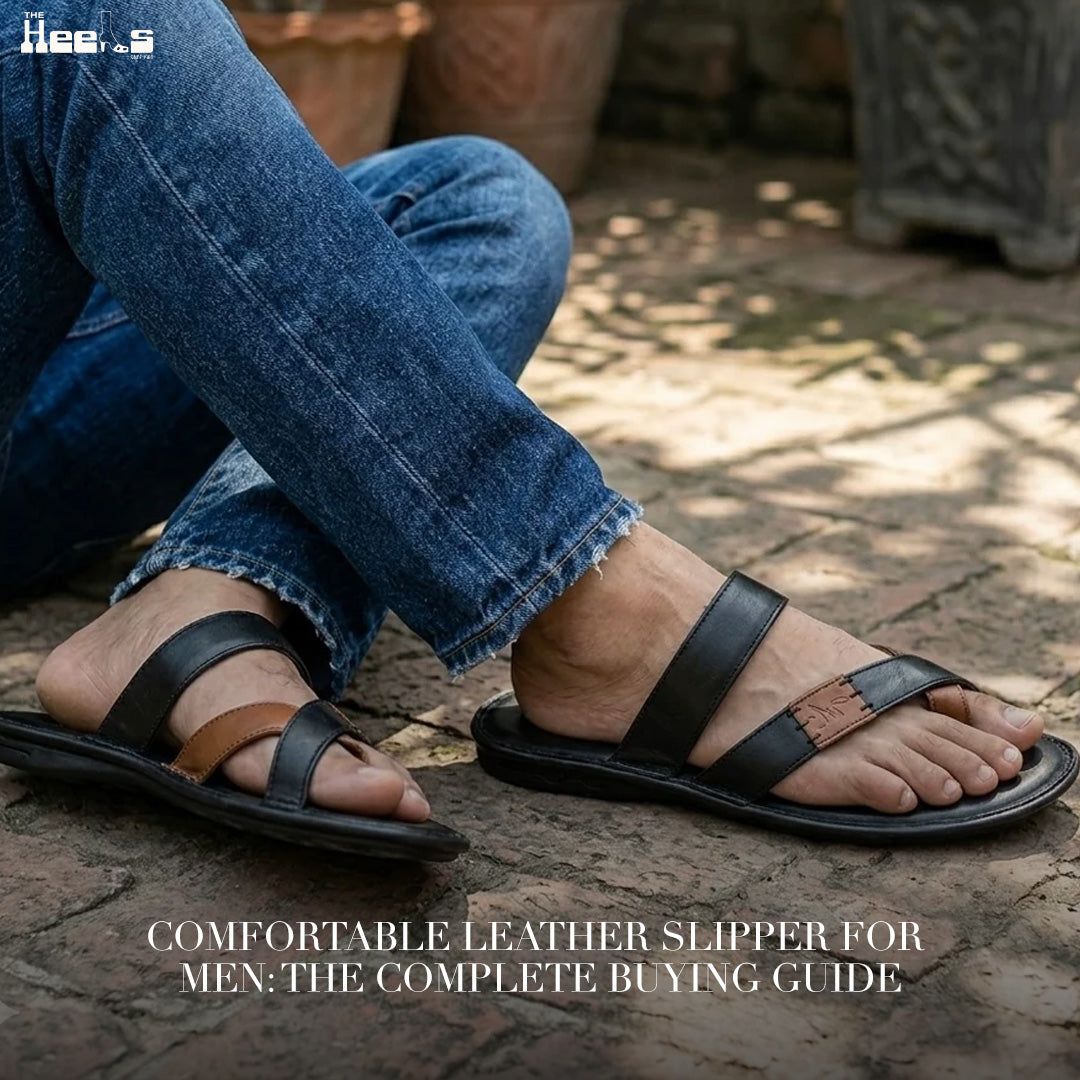
Kolhapuris come from Maharashtra and they are, in the most literal sense, the toughest thing on this list. Traditionally vegetable-tanned leather, hand-stitched, with a T-strap or toe-loop and a sole built for walking on actual roads.
Here's the honest positioning: a Kolhapuri is not wedding footwear. It's everything else footwear.
Sunday brunch in a linen kurta. A house party. Chandni Chowk in October. A Saturday where you want to look put-together without looking like you're trying. The Kolhapuri does that better than anything else in the category, and it's the pair that ends up living by the door instead of in a box.
They also age better than any other ethnic style. Vegetable-tanned leather darkens and softens with wear — a two-year-old Kolhapuri looks better than a new one, which is not something you can say about most footwear at any price. Our Royce Leather Kolhapuri Chappals and Lorden Kolhapuris are both built on that traditional construction.
Fair warning: Kolhapuris are stiff for the first week. That's the material, not the workmanship. Wear them around the house for a few evenings and they'll mould to your foot permanently.
The One-Glance Comparison
|
Peshawari |
Mojari |
Kolhapuri |
|
|
Construction |
Open, crossed straps |
Closed, slip-on |
Open, T-strap or toe-loop |
|
Best for |
Weddings, sangeet, mehendi |
Reception, engagement, festive dinner |
Daily ethnic, brunch, casual |
|
Best season |
All year |
Oct–Feb |
All year |
|
Break-in |
None |
3–5 wears |
5–7 wears |
|
Wear with |
Sherwani, kurta, bandhgala |
Sherwani, Indo-western, bandhgala |
Kurta, jeans, linen |
|
Formality |
Festive to formal |
Formal |
Casual to festive |
If You're Buying Just One Thing This Festive Season
Buy a tan Peshawari. It covers the widest range of functions, needs no break-in, survives heat, and works with almost every sherwani colour you're likely to own. Everything else is a second or third pair.
If you already have that, the order goes: mojari in a dark or unusual colour for the formal end, then a Kolhapuri for the eleven months of the year that aren't wedding season.
And if you want something that sits between ethnic and Western — for an Indo-western jacket, or a mehendi where nobody quite knows the dress code — the Caspian Leather Ethnic Slip-ons and Ayaan Cross Ethnic Loafers handle that gap. Closed like a loafer, detailed like a mojari.
Try Before the Rush
Ethnic footwear is genuinely difficult to size online, because open-back styles fit differently from anything else you own. If you're in Delhi NCR, come to the Connaught Place shop and try the three side by side — the difference is obvious in thirty seconds and impossible to judge from photos.
If you can't get to CP, our Heels On Wheels service brings the shop to you: a video call to shortlist, then a sales executive arrives at your home or office with your sizes to try on. Useful in the two weeks before a wedding, when nobody has an afternoon to spare.
And if a function is closer than that — we do emergency same-day delivery across NCR when the size is in stock.
Common Questions
Are Peshawari sandals formal enough for a wedding?
Yes. Peshawaris are standard wedding footwear across North India and are appropriate for everything from a mehendi to a sherwani-dress-code baraat. For a formal evening reception, a dark leather or hand-painted pair reads more elevated than plain tan.
What's the difference between a mojari and a jutti?
In practice the terms overlap heavily. Broadly, "mojari" tends to describe the men's closed slip-on with a rounded or slightly upturned toe, while "jutti" is used more often for the embroidered Punjabi style worn by both men and women. Regionally, people use both words for the same shoe.
Can you wear Kolhapuri chappals to a wedding?
To a daytime haldi or a casual pre-wedding function, yes. To the main ceremony or reception, no — go with a Peshawari or a mojari. Kolhapuris read as casual, which is their strength, not a flaw.
How do I size ethnic footwear if I usually wear UK 9 formals?
Peshawaris and Kolhapuris generally run true to your formal shoe size — take your usual size. Mojaris often run slightly snug because of the closed upper, so if you're between sizes, go up. Never size up on an open-back Peshawari to "be safe"; you'll lose your heel off the back.
How do I stop new ethnic leather footwear from biting?
Wear them indoors for three to four evenings, an hour at a time, before the event. Rub a small amount of leather conditioner along the inside edge of any strap that sits against skin. Do this the week before the wedding, not the morning of.