Article: 10 Best Ethnic Footwear for Men for Indian Weddings & Festive Events
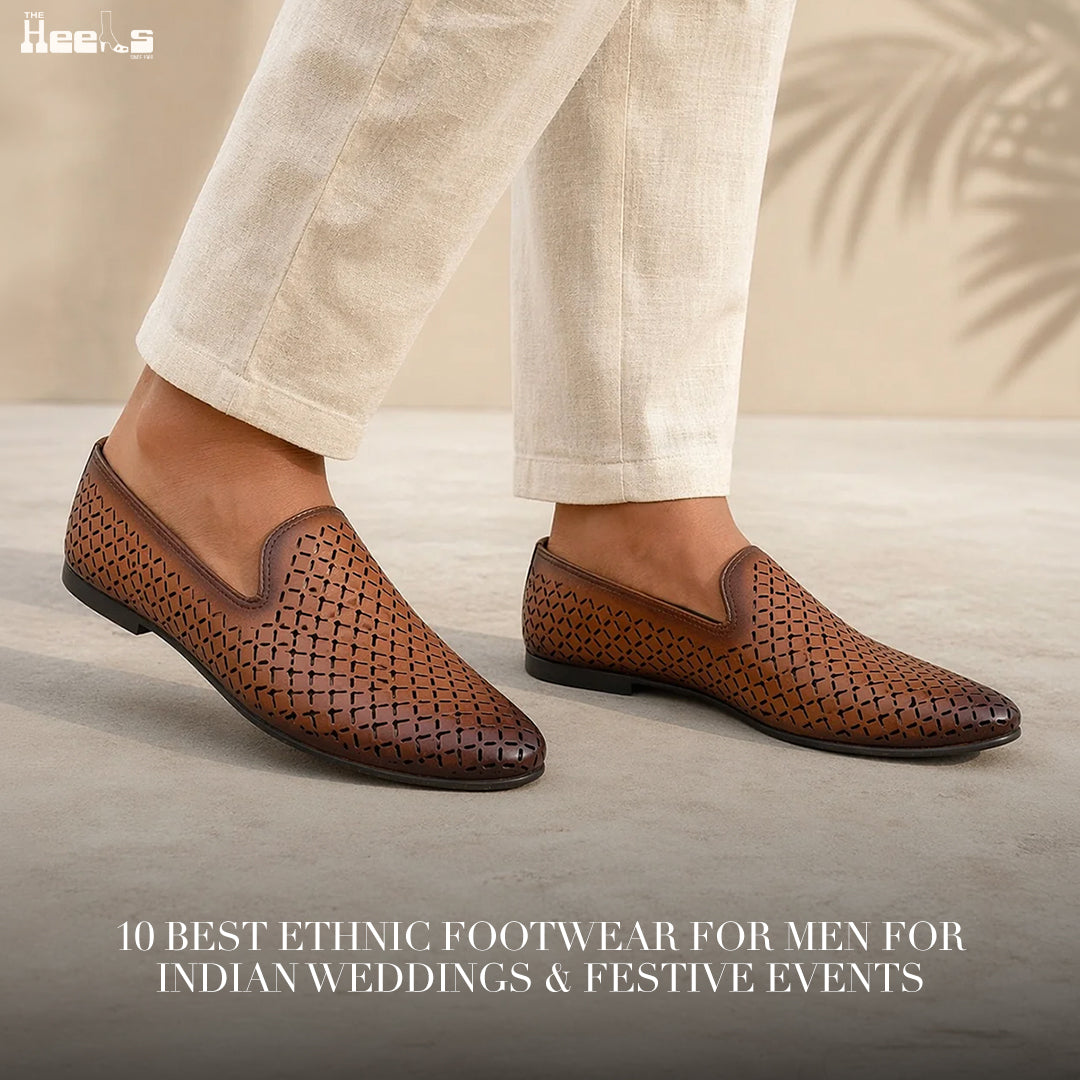
10 Best Ethnic Footwear for Men for Indian Weddings & Festive Events
Most men spend weeks deciding between a kurta and a sherwani, agonising over colour and embroidery, and then grab whatever shoes are closest to the door on the actual day. It's an easy thing to overlook, but footwear is the one part of the outfit that has to survive hours of standing, walking between functions, and dancing — while still looking like it was chosen on purpose.
The good news is that ethnic footwear for men isn't complicated once you know what you're matching it against. Mojaris, juttis, Peshawari-style sandals, traditional leather sandals and a few dressier slip-on styles can all work, depending on the outfit, the function, and how formal the day actually is. This guide walks through ten footwear options worth knowing, plus practical guidance on matching them to your outfit, the occasion, and your own comfort over a long day.
What Is Ethnic Footwear for Men?
Ethnic footwear covers the range of traditional and traditional-inspired shoes worn with Indian outfits — kurtas, sherwanis, Nehru jackets, Pathani suits and Indo-Western pieces. It sits apart from everyday sneakers or standard office formals mainly in construction and styling: closed slip-on silhouettes, leather or leather-look uppers, and detailing that ranges from completely plain to fully embroidered.
Which specific pair works best for you depends on a handful of things — the outfit you're wearing, how formal the function is, how long you'll be on your feet, the colour of your outfit, whether it's a day or evening event, and honestly, just your own taste. None of these factors work in isolation, which is really the point of this guide.
10 Best Ethnic Footwear for Men
1. Juttis
Juttis are flat, closed-toe slip-ons with a distinctive curved or pointed front, traditionally made in leather with varying levels of embroidery or print detailing. They work well for Indian weddings because they're comfortable enough for a full day of functions while still looking distinctly traditional. Juttis pair naturally with a kurta pajama, a kurta set, or a sherwani, and they suit almost every function from Mehendi through to the wedding ceremony itself. Heels India's Nawab Printed Leather Juttis are a good example — the print does the visual work without needing heavy embroidery, which makes them easy to pair with a range of outfit colours. Styling tip: if your kurta already has visible embroidery, a printed or plain jutti usually looks more considered than an embroidered one competing for attention.
2. Mojaris
Mojaris are close cousins of juttis, generally a little more ornate, with a curled toe and often more detailed handwork across the upper. They suit slightly more formal occasions — the wedding ceremony or a reception — and pair especially well with a sherwani, kurta jacket set, or Nehru jacket over a kurta. Heels India's Marquis Leather Ethnic Mojri has enough detailing to hold its own against a richer outfit without looking overdone. Styling tip: mojaris tend to look best with outfits that have some embellishment of their own — a completely plain kurta can make an ornate mojri feel slightly mismatched in formality.
3. Peshawari-Style Sandals
Peshawari sandals are an open, strap-based sandal, generally in leather, with a more relaxed and rugged construction than juttis or mojaris. They work particularly well for daytime functions and warmer weather, since the open design breathes better than a closed shoe. Heels India's Cesar Leather Ethnic T Cut Peshawari Sandals suit a kurta pajama or a Pathani suit particularly well. Styling tip: Peshawaris read as more casual than juttis or mojaris, so they're a better match for Mehendi and Haldi than for the wedding ceremony itself.
4. Traditional Leather Roman Sandals
A step further into open, strappy territory, Roman-style leather sandals bring a slightly more contemporary edge while still reading as ethnic rather than western. They suit relaxed festive functions and daytime events where comfort matters more than formality. Heels India's Ajrakh Strappy Leather Roman Sandals work well with a simple kurta pajama or a lighter Indo-Western outfit. Styling tip: these tend to suit lighter-coloured, less embellished outfits better than heavily worked ones, since the sandal itself already carries some visual interest through its strap detailing.
5. Embroidered or Handcrafted Juttis
For weddings and receptions where you want the footwear itself to carry a bit more presence, a more heavily worked jutti earns its place. Heels India's Nawab Handcrafted Leather Juttis sit in this category — more refined detailing than a basic printed jutti, without moving into full mojari territory. These suit a sherwani or an embellished kurta set for the wedding day or a reception. Styling tip: if you're going with a heavily detailed shoe, it's worth keeping the rest of your accessories minimal so the footwear doesn't get lost in a busy overall look.
6. Ethnic Slip-Ons
Ethnic slip-ons take a cleaner, more minimal silhouette than a traditional jutti or mojari, while still using leather and a closed-toe construction that reads as appropriately dressy for Indian functions. Heels India's Caspian Leather Ethnic Slip-ons suit men who want their footwear to feel more understated, and they work well with a Nehru jacket over a kurta or a contemporary kurta set. Styling tip: this is a good option if you're not fully sold on traditional detailing but still want something more occasion-appropriate than a standard formal shoe.
7. Dressy Ethnic Loafers
Loafers built specifically for ethnic wear bridge the gap between traditional footwear and something closer to western formalwear. Heels India's Romano Leather Ethnic Loafers work particularly well with Indo-Western outfits or a kurta paired with contemporary trousers rather than a traditional pajama. Styling tip: ethnic loafers suit modern, less traditional wedding looks better than a very classic sherwani — they can look slightly out of place next to heavy, traditional embroidery.
8. Cushioned Mojaris for Long Functions
If comfort is your main concern — and for anyone standing through a full day of wedding functions, it should be — a cushioned mojari is worth considering specifically for the added comfort rather than just the look. Heels India's Reuben Cushioned Ethnic Mojris keep the traditional silhouette while adding padding that makes a real difference over several hours. These pair well with a kurta pajama for Mehendi, Haldi, or any function where you know you'll be on your feet most of the day. Styling tip: comfort-focused footwear like this is worth prioritising for the functions with the most standing and dancing — save your more delicate, less cushioned pair for shorter, more formal events.
9. Lightweight Peshawaris for Daytime Functions
For particularly warm daytime functions, a lighter, non-leather Peshawari can be genuinely more comfortable than a heavier leather pair. Heels India's Darius Vegan Non Leather Peshawari Sandals suit Mehendi and Haldi functions especially well, where practicality tends to matter more than formality. Styling tip: keep these for the more relaxed, daytime parts of the wedding — they're not the pair to reach for on the wedding day itself or at a formal reception.
10. Premium Statement Peshawari Sandals
For the wedding day, reception, or any function where you want your footwear to genuinely stand out, a more premium, richly finished Peshawari sandal does the job without needing to be a closed shoe. Heels India's Declan Leather Ethnic Peshawari Sandals sit at the more elevated end of the range, with a finish that suits a sherwani or a heavily detailed kurta set. Styling tip: a statement pair like this works best when the rest of the outfit isn't competing for attention — let the footwear be one of the outfit's higher points, not one of several.
Which Ethnic Footwear Should You Wear With Different Indian Outfits?
A kurta pajama is the most flexible outfit to dress, and it pairs naturally with a mojari or jutti for a traditional look — Heels India's Regent Leather Mojaris work well here. A kurta set — kurta with matching trousers — works well with a jutti or a cleaner ethnic slip-on for a smart, festive finish. A sherwani, being the most formal traditional outfit, calls for an embroidered mojari or a detailed jutti to match its formality. Pairing a Nehru jacket over a kurta gives you room to go slightly more contemporary — a mojari still works, but so does a dressier ethnic loafer such as Heels India's Eclipse Premium Buckled Ethnic Loafers. A Pathani suit suits Peshawari-style footwear particularly well, since the two share a similar regional and casual-traditional character — Heels India's Emir Leather Peshawari Sandals are a good match. And for Indo-Western outfits, a minimal ethnic shoe or a loafer tends to suit the more modern silhouette better than a heavily traditional jutti or mojari — Heels India's Chester Premium Leather Ethnic Slip-ons fit this direction well.
Best Ethnic Footwear for Different Wedding Functions
Mehendi functions call for comfort and colour over formality — a lighter Peshawari sandal or a simple jutti in a festive colour works well, especially given the amount of sitting and standing involved. Heels India's Suleman Ethnic Leather Juttis are a good fit for this kind of relaxed, colourful function.
Haldi functions are usually the most casual of the pre-wedding events, so easy-to-wear, comfortable footwear matters more than how dressy it looks. A Peshawari or a comfortable jutti covers this well — Heels India's Florian Handmade Leather Peshawari Sandals are worth considering.
Sangeet allows a bit more room for fashion — this is where a more statement mojari or a dressier ethnic loafer can work, especially if the outfit itself is more contemporary. Heels India's Ayaan Leather Cross Ethnic Loafers suit this kind of higher-energy, style-forward function.
The wedding ceremony generally calls for more traditional, refined footwear — an embroidered mojari or a detailed jutti suits the formality of the day. Heels India's Lafattio Handcrafted Leather Juttis are built with this level of occasion in mind.
Reception functions are usually the most polished of all the wedding events, so a premium mojari, a detailed jutti, or a dressier ethnic slip-on tends to work best alongside a more formal ethnic outfit. Heels India's Elliot Leather Crown Ethnic Slip-ons suit this more polished, evening-appropriate setting well.
None of these are strict rules — they're simply directions that tend to match the mood and formality of each function.
How to Choose the Right Ethnic Footwear for Men
Comfort deserves more weight in the decision than it usually gets. Wedding functions often involve several hours of standing, walking between venues, and dancing, so a shoe that looks good but pinches after twenty minutes isn't doing its job.
Fit matters just as much as style — a shoe that's slightly loose will rub and blister over a long day, while one that's too tight becomes unbearable fast. It's worth trying footwear on with the socks or bare feet you'll actually wear on the day, since ethnic footwear often fits differently than western shoes.
Material affects both comfort and appearance. Leather tends to mould to your foot over time and generally looks more premium, while lighter, non-leather options can be a practical choice for daytime functions in warmer weather.
Colour should generally work with your outfit rather than match it exactly. Brown and tan pair naturally with beige, cream, ivory and earthy-toned kurtas. Black suits darker, more formal outfits. Gold and richer tones suit festive, embellished pieces. None of these are fixed rules — they're simply combinations that tend to look coherent rather than jarring.
Embellishment should scale with your outfit rather than compete with it. A heavily embroidered sherwani generally looks more balanced with simpler footwear, while a plainer kurta has more room for a detailed jutti or mojari to stand out.
Occasion should influence formality more than anything else — what works for Haldi rarely works for the wedding ceremony, and vice versa.
Ethnic Footwear for Men: Traditional vs Modern Styles
Traditional styles — mojaris, juttis, Peshawari sandals — carry the most recognisably Indian character and tend to suit outfits that lean traditional themselves, like a sherwani or a classic kurta pajama. Modern styles — minimal ethnic slip-ons, contemporary ethnic loafers, cleaner silhouettes — work better with Indo-Western outfits or kurtas styled with a more current cut. Neither direction is objectively better. Ethnic dressing doesn't require a fully traditional shoe by default; it just needs footwear that's genuinely in step with the rest of your outfit.
Common Mistakes Men Make When Choosing Wedding Footwear
Buying footwear purely on how it looks in a product photo, without considering comfort, is one of the more common mistakes — and one of the most regretted by the end of a long wedding day. Wearing shoes that haven't been broken in at all for a function involving hours of standing rarely ends well. Choosing a shoe that clashes with the outfit — a very casual Peshawari with a heavily formal sherwani, for instance — can throw off an otherwise well put-together look. Mixing overly formal footwear with a relaxed, casual kurta can feel similarly mismatched in the other direction. Pairing heavily embellished shoes with an already heavily embellished outfit tends to look busier than intended rather than more festive. And picking a colour without considering the full outfit — not just the kurta, but the trousers, jacket and any accessories — can leave the footwear looking like an afterthought rather than part of the look.
FAQ’s
What is the best ethnic footwear for men for Indian weddings?
It depends on the outfit and function, but juttis and mojaris are generally the most versatile — comfortable enough for long days and traditional enough to suit most wedding functions, from Mehendi through to the reception.
Can men wear juttis with a kurta pajama?
Yes — juttis are one of the most natural pairings for a kurta pajama, and they work across almost every wedding function.
What shoes should men wear with a sherwani?
An embroidered mojari or a more detailed jutti generally suits a sherwani best, since the formality and detailing of the shoe matches the outfit.
Are mojari shoes comfortable for weddings?
They can be, especially cushioned versions designed for longer wear. If comfort is a priority, look for a mojari with added cushioning rather than a purely traditional, unpadded construction.
What footwear should men wear to a Mehendi function?
Something comfortable and relaxed works best — a lightweight Peshawari sandal or a simple jutti suits the casual, colourful mood of most Mehendi functions.
Which colour footwear goes best with a kurta?
Brown and tan work well with beige, cream and earthy-toned kurtas. Black suits darker, more formal outfits. There's no single correct colour — it comes down to coordinating with your outfit's overall tone rather than matching it exactly.
Can loafers be worn with Indian ethnic wear?
Yes, particularly ethnic-specific loafers with Indo-Western outfits or kurtas styled with contemporary trousers. They tend to suit modern wedding looks better than very traditional, heavily embroidered outfits.