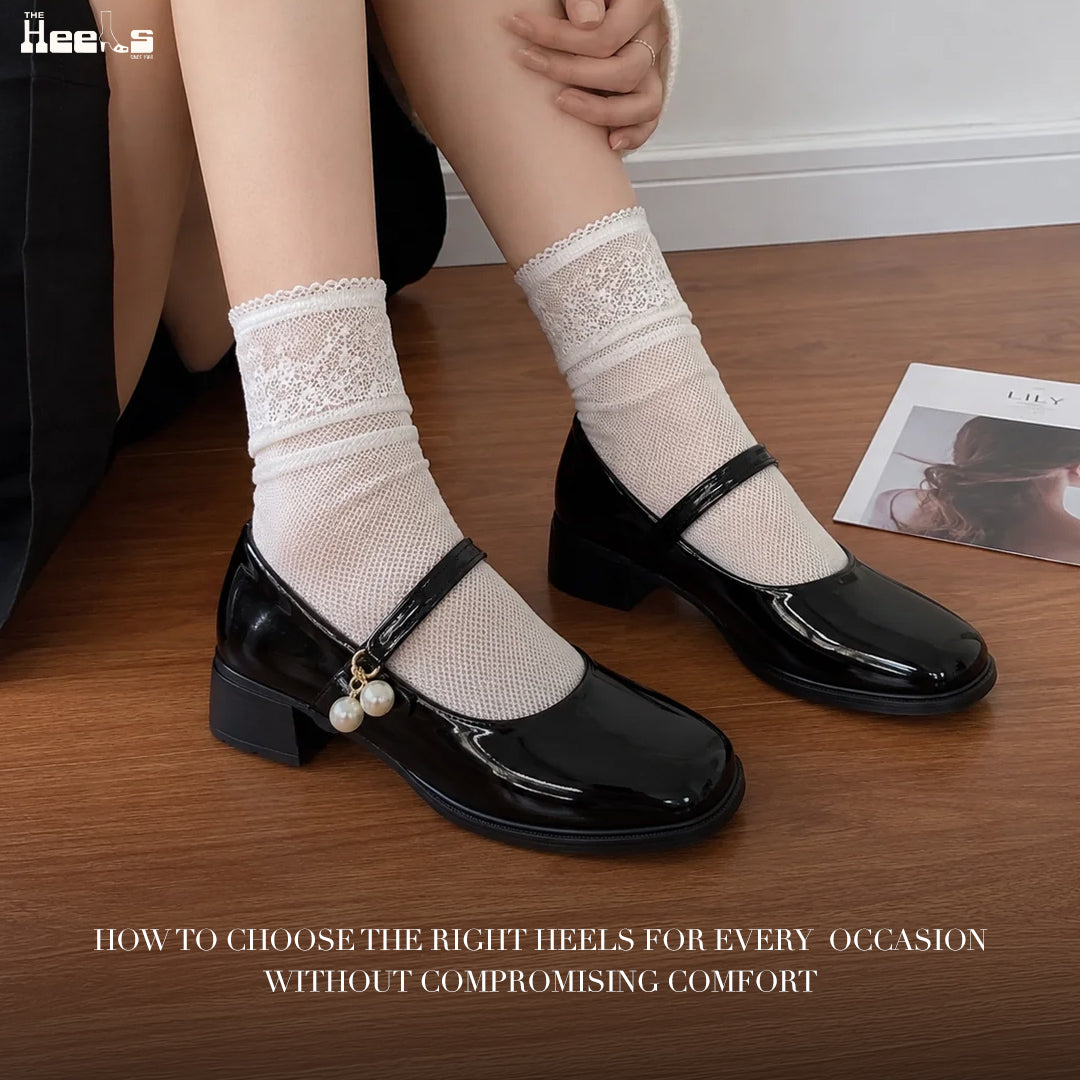
How to Choose the Right Heels for Every Occasion Without Compromising Comfort
Most women have a pair of heels sitting in the back of the cupboard that looked beautiful online or in the store, and then got worn exactly once. Not because the shoe wasn't good — because it started hurting an hour into the event, and after that, comfort won every single time.
The right pair of heels for women isn't automatically the highest one, or the trendiest one, or the one that looked best in the photo. It's the one that matches where you're actually going, how long you'll be wearing it, how much walking or standing is involved, and what you're wearing it with. Heel height, heel shape, fit, and support all matter more than how a shoe looks sitting on a shelf. Get those right for the occasion, and you stop thinking about your feet halfway through the evening.
What Makes a Pair of Heels Comfortable?
Before getting into which heel suits which occasion, it helps to understand what actually makes a heel wearable in the first place.
Heel height is the most obvious factor. A lower heel generally offers more stability and is easier to manage for longer periods, while a higher heel shifts more weight forward and asks more of your balance. Neither is "better" in an absolute sense — it depends entirely on how long you'll be on your feet and what surface you're walking on.
Heel shape changes how your weight gets distributed. A block heel spreads weight across a wider base, which tends to make it more stable on uneven ground. A kitten heel keeps the height low while still offering a defined heel shape. A wedge distributes weight along its full length, which is part of why it often feels sturdier for walking. A pencil or stiletto heel concentrates weight into a very small point of contact, which is exactly why it can feel less stable on grass, cobblestones, or slippery flooring.
Footbed and cushioning matter more the longer you're wearing the shoe. A well-cushioned footbed doesn't change the heel height, but it can make a real difference by the third or fourth hour of standing.
Toe shape affects how spacious or restrictive a shoe feels. Round and square toes generally give your toes more room to sit naturally. Pointed toes narrow towards the front, which can look sharper but leaves less space. Peep-toe styles fall somewhere in between, exposing part of the foot while keeping some structure around it.
Straps and support decide how securely the shoe stays on your foot. An ankle strap holds the heel in place, which matters if you'll be walking a fair distance or dancing. A slingback offers similar support with a slightly different look. Elastic backs flex a little for comfort, and slip-on styles rely purely on fit — which means getting the size right matters even more with this kind of style.
How to Choose Heels Based on the Occasion
Office and Workwear
Office dressing calls for heels that can survive eight or nine hours without becoming the thing you're thinking about in every meeting. Low block heels, kitten heels, mid-height pumps, and subtle slingbacks all work well here — structured enough to look professional, low enough to actually get through the day. Extremely high heels or anything heavily embellished tend to feel impractical for a normal workday, both because of comfort and because they can look mismatched with office attire. For a deeper look at this specific occasion, Heels India's guide on heels for office wear covers it in more detail.
Weddings and Wedding Functions
Wedding footwear needs to look special without becoming something you can barely walk in — and Indian weddings, in particular, often involve a fair amount of walking between venues, standing through longer ceremonies, and navigating both indoor and outdoor spaces in the same event. What works best depends on how much walking is involved, how long the function runs, whether you're in ethnic or western wear, and whether it's a daytime or evening event.
Embellished block heels and wedges tend to handle outdoor or daytime functions better, since they offer more stability on grass or uneven flooring. Party heels and elegant stilettos can work well for shorter, mostly-seated events like a reception dinner, where you're not on your feet for hours at a stretch. Kitten heels are a reliable middle ground for functions where you want to look dressed up but know you'll be standing for a while. Something like the Noor Embellished Ethnic Fancy Wedge Heels shows how a wedge can carry festive detailing while still staying practical for a longer function.
Party and Night-Out Looks
Party wear heels are where a lot of women feel comfortable going a bit more dramatic — pencil heels, stilettos, platform heels, embellished styles, metallic finishes, and statement pieces all suit the mood of a night out. But it's worth thinking about what the party actually involves before picking the highest heel in your collection. A party that involves dancing and standing for several hours calls for a different heel than a short dinner or a seated cocktail event. If you know you'll be on the dance floor most of the night, a block heel or platform with a bit more surface area will hold up better than a thin stiletto will.
Festive and Ethnic Outfits
Sarees, lehengas, salwar suits, anarkalis, kurta sets, and Indo-Western outfits all pair differently with heels, largely because of how the outfit's length and silhouette interact with heel height. A long lehenga or saree can visually shorten the frame if the heel is too low, while a very high heel can throw off how the outfit falls when you're seated or walking. Block heels, wedges, and embellished heel styles tend to work well across most ethnic silhouettes because they offer height without sacrificing stability, and a kitten heel is a solid option for anyone who wants a lift without much risk of discomfort. There's no fixed rule that says one heel height suits every ethnic outfit — it's worth trying the heel with the actual outfit before deciding, particularly for something floor-length.
Date Nights and Dinners
A date night or dinner doesn't automatically call for the highest heel you own. Kitten heels, slingback heels, pointed-toe pumps, and mid-height block heels can all create a polished, elegant look without the discomfort of a very high heel worn for several hours at a table and then walking back out afterward. This is really where a well-chosen mid-height heel earns its place — dressy enough for the setting, comfortable enough that you're not shifting your weight under the table all evening.
Everyday Wear and Casual Outfits
Heels can absolutely work for everyday dressing, and the trick is choosing something built for repeat wear rather than a single event. Low block heels, kitten heels, wedges, comfortable mules, and low platform styles all pair naturally with jeans, trousers, dresses, skirts, and casual co-ords. These lower, sturdier styles are the ones most likely to get worn again and again, precisely because they don't demand the same level of caution as a taller, more occasion-specific heel.
Block Heels vs Wedges vs Kitten Heels vs Stilettos
Block heels work well for office days, weddings, and everyday wear. Their wide base makes them one of the most stable options around, which is exactly why they hold up for long stretches on your feet. Style-wise, they read as structured and versatile — equally at home under a saree or a pair of trousers.
Wedges are the go-to for outdoor events, ethnic wear, and festivals, largely because the weight distributes along the whole sole rather than a single point. That makes them just as stable as block heels for long wear, while leaning slightly more casual to festive in how they look.
Kitten heels suit office wear, dinners, and formal events where you want height without much risk. Stability sits at moderate to high — enough to walk confidently for hours — and the overall effect is polished without being showy.
Platforms are better suited to parties and evening events. They offer moderate stability and are best for a medium stretch of wear rather than an entire day, but they deliver a bold, statement-making look that a plainer heel can't match.
Stilettos and pencil heels are the choice for parties and shorter formal events. Stability is lower here, simply because the weight rests on a single narrow point, which is why they're better suited to shorter wear rather than hours of standing. What they lack in stability, they make up for in a sharp, dramatic silhouette.
Comfort isn't fixed to any single heel type on this list — it depends heavily on construction quality, how well the shoe fits your foot, the actual heel height within that category, and your own personal tolerance for time on your feet. A well-made block heel can still feel uncomfortable if it's the wrong size, and a well-fitted stiletto can be perfectly wearable for a couple of hours at a seated event.
How High Should Your Heels Be?
Low heels — generally most comfortable for everyday wear, office days, longer events, and anyone still getting used to wearing heels regularly. They offer the most stability and the least strain over a full day.
Mid-height heels — a practical middle ground for weddings, dinners, outfits that need to transition from office to evening, and most festive occasions. This range tends to balance a dressier look with enough comfort to last several hours.
High heels — best suited to parties, formal evening events, and situations where you want a strong style statement and know the wear time will be shorter. These work well when you're not on your feet for the entire event, or when you have the option to switch into something lower later on.
These are general starting points rather than fixed rules — the right height for you also depends on how used to heels you are, your own comfort with balance, and how the specific pair fits your foot.
How to Match Heels With Your Outfit
With sarees: heel height affects how much of the saree shows and how the pleats fall while walking. A moderate heel usually keeps the proportions balanced without shortening the silhouette.
With dresses: the heel silhouette changes the overall line of the outfit — a pointed pump elongates the leg, while a block heel or wedge gives a sturdier, more grounded look that suits a fuller or shorter dress differently.
With trousers and jeans: pumps, slingbacks, block heels, and pointed heels all work, largely depending on whether the trouser is tailored (which suits a sleeker heel) or relaxed (which can carry a chunkier block heel or wedge just as well).
With lehengas and ethnic wear: embellished heels, wedges, and stable block heels tend to hold up best, since these outfits often involve standing for longer stretches during rituals and photographs.
With skirts: kitten heels, pumps, and strappy heels each shift the look slightly — a kitten heel feels more everyday, while a strappy heel adds a bit more polish for an evening version of the same skirt.
The reasoning behind each choice matters more than a fixed pairing rule — think about how long you'll be in the outfit, how the heel height affects the silhouette, and whether the event involves more standing or more sitting.
How to Choose Comfortable Heels for Long Events
Comfortable heels don't necessarily mean flat ones — a well-designed low or medium heel can outperform a completely flat shoe for certain outfits and occasions, depending on your own preference and what you're wearing.
A few things are worth checking before committing to a pair for a long event. Get the size right — not just length, but width, since a shoe that's technically your size but too narrow will cause problems within an hour. Make sure there's enough room for your toes, particularly in pointed or narrow styles. Check whether the heel feels stable when you walk a few steps in the store or at home, not just when you're standing still. Consider the actual heel height relative to how long you'll be wearing it, and look for cushioning in the footbed if the event involves several hours on your feet. Straps — ankle straps or slingbacks in particular — help keep the shoe secure if you'll be walking a fair distance or dancing.
It's also worth testing any new pair around the house before a long event, rather than wearing it for the first time on the day itself. And if a shoe already feels slightly uncomfortable in the store, it's unlikely to feel better after several hours — that's usually a sign to size up, try a different width, or choose another style entirely. Many women also carry a compact pair of flats as backup for weddings or long events, which is a practical habit rather than a compromise on style.
7 Common Mistakes Women Make When Buying Heels
Choosing appearance over fit is probably the most common one — a beautiful heel in the wrong size or width rarely becomes more comfortable no matter how much you want it to. Buying the wrong size, particularly sizing based on a different brand's fit, causes more discomfort than almost anything else on this list. Ignoring toe shape is another oversight — a narrow, pointed toe box can feel fine standing in a shop and completely different after two hours of walking.
Buying a heel that's too high for the actual occasion, and then forgetting how long the event will last, are related mistakes that usually come from picking a shoe based on how it looks rather than what the day actually involves. Not considering the surface you'll be walking on — grass, cobblestones, marble — can turn a perfectly good heel into a genuinely difficult one to manage. And buying a highly dramatic statement pair without thinking about repeat wear often results in a shoe that gets worn once and then never again, simply because it doesn't fit into more than one kind of outfit or event.
How to Build a Versatile Heel Wardrobe
Rather than buying a separate pair for every event, a small, well-chosen collection covers most situations.
One neutral block heel works for office days, dinners, and everyday polished outfits — probably the single most reused pair in most women's collections. One kitten heel covers comfortable formal looks where you want a bit of height without much compromise on comfort. One party heel — a stiletto, platform, or something with a bit of shine or embellishment — handles evening events and celebrations. One wedding or festive heel, often a block heel or wedge with embellishment, works across sarees, lehengas, and other ethnic outfits. One versatile wedge adds extra stability for outdoor functions or longer events where standing for hours is part of the plan.
A neutral colour and a relatively simple design go a long way here — a well-made black or nude heel in any of these categories will end up doing double or triple duty across occasions that a bolder, more specific colour or print never could.
How to Choose the Right Heels in One Minute
Need to walk or stand for hours? → Choose a low or mid block heel, kitten heel, or wedge.
Going to a wedding? → Choose an embellished block heel, wedge, or an elegant mid or high heel depending on how long the function runs.
Going to a party? → Consider stilettos, pencil heels, or statement platforms, especially for a shorter or mostly-seated event.
Need office footwear? → Choose a structured block heel, pump, or kitten heel that can last a full workday.
Wearing ethnic clothing? → Consider embellished heels, block heels, or wedges for stability under a saree or lehenga.
Want maximum versatility? → Start with a neutral block or kitten heel that works across the most occasions.
Conclusion: Style Shouldn't Come at the Cost of Comfort
The best heels aren't necessarily the tallest or the most dramatic pair on the shelf. They're the ones that fit the occasion, work with the outfit, and let you actually enjoy the event instead of thinking about your feet through all of it.
Heels for women should feel like a decision made with the day in mind — how long you'll be wearing them, what you're wearing them with, and how much walking or standing is realistically involved. Once that's settled, exploring different styles — from block heels to wedges to something a little more dramatic for a party — becomes a lot easier and a lot less likely to end in a pair that only gets worn once.
FAQ’s
1. Which heels are most comfortable for long hours?
Block heels and wedges are generally the most comfortable for long hours because they distribute weight more evenly and offer a wider, more stable base. A cushioned footbed and the correct size matter just as much as the heel shape itself.
2. What type of heels are best for weddings?
It depends on the function — embellished block heels or wedges work well for longer, outdoor, or daytime events, while party heels or elegant stilettos suit shorter, mostly-seated functions like a reception dinner. Kitten heels are a reliable middle ground for most wedding events.
3. Are block heels more comfortable than stilettos?
Generally, yes, because block heels spread weight across a wider surface and offer more stability. However, comfort also depends on fit, cushioning, and heel height, so a well-made stiletto in the right size can still be comfortable for shorter periods.
4. What heels should I wear with a saree?
A moderate block heel or wedge usually works best with a saree, since it keeps the outfit's proportions balanced and offers enough stability for walking with the pleats. Very high or very thin heels can make it harder to manage the drape while walking.
5. Which heels are best for parties?
Stilettos, pencil heels, platforms, and embellished or metallic styles are popular choices for parties. The right pick depends on how much dancing or standing is involved — a block heel or platform holds up better through hours of movement than a thin stiletto.
6. How do I choose the right heel height?
Match the height to how long you'll wear the shoe and how much walking is involved. Low heels suit long days and everyday wear, mid-height heels work for weddings and dinners, and high heels are best saved for shorter, more formal events like parties.