Monsoon Footwear Guide: What Actually Survives a Delhi Downpour
There is a specific sound a good leather shoe makes when it has been walked through six inches of Delhi rainwater and then left to dry near a fan. It's a kind of stiff creak. It means the shoe is finished — the leather fibres have swollen, dried too fast, and cracked from the inside.
We hear about it every August. Someone brings in a pair of formals they've owned for two years, bought here, worn happily, and ruined in a single afternoon in July.
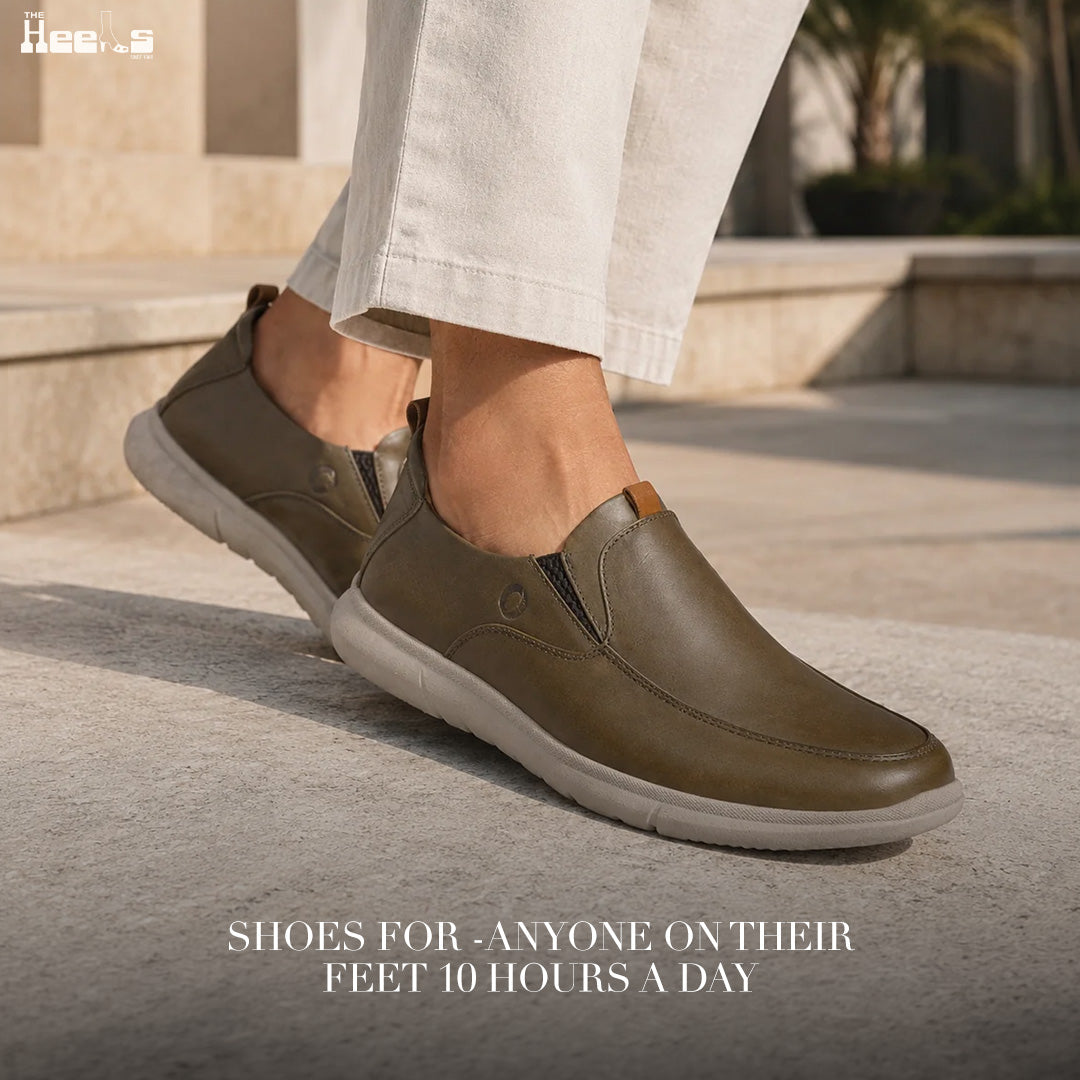
The monsoon does more damage to Indian wardrobes than any other season, and almost all of it is avoidable. Not by buying "waterproof shoes" — most of what's sold under that label in India is plastic that makes your feet sweat — but by understanding which shoe to wear on which kind of day, and what to keep firmly in the cupboard until October.
The Rule Nobody Tells You: Open Beats Closed, Always
Instinct says cover your feet when it rains. Instinct is wrong.
A closed shoe in monsoon is a bucket. Water gets in — over the top, through the seams, up from the puddle — and then it has nowhere to go. Your foot spends four hours in a warm, wet, enclosed space, which is precisely the environment that causes the fungal infections every dermatologist in Delhi sees a spike of between July and September.
An open shoe gets wet and then dries. On your foot. Within twenty minutes of the rain stopping. That's the whole argument.
So the monsoon hierarchy, best to worst:
1. Sliders and open sandals — get wet, dry fast, nothing trapped
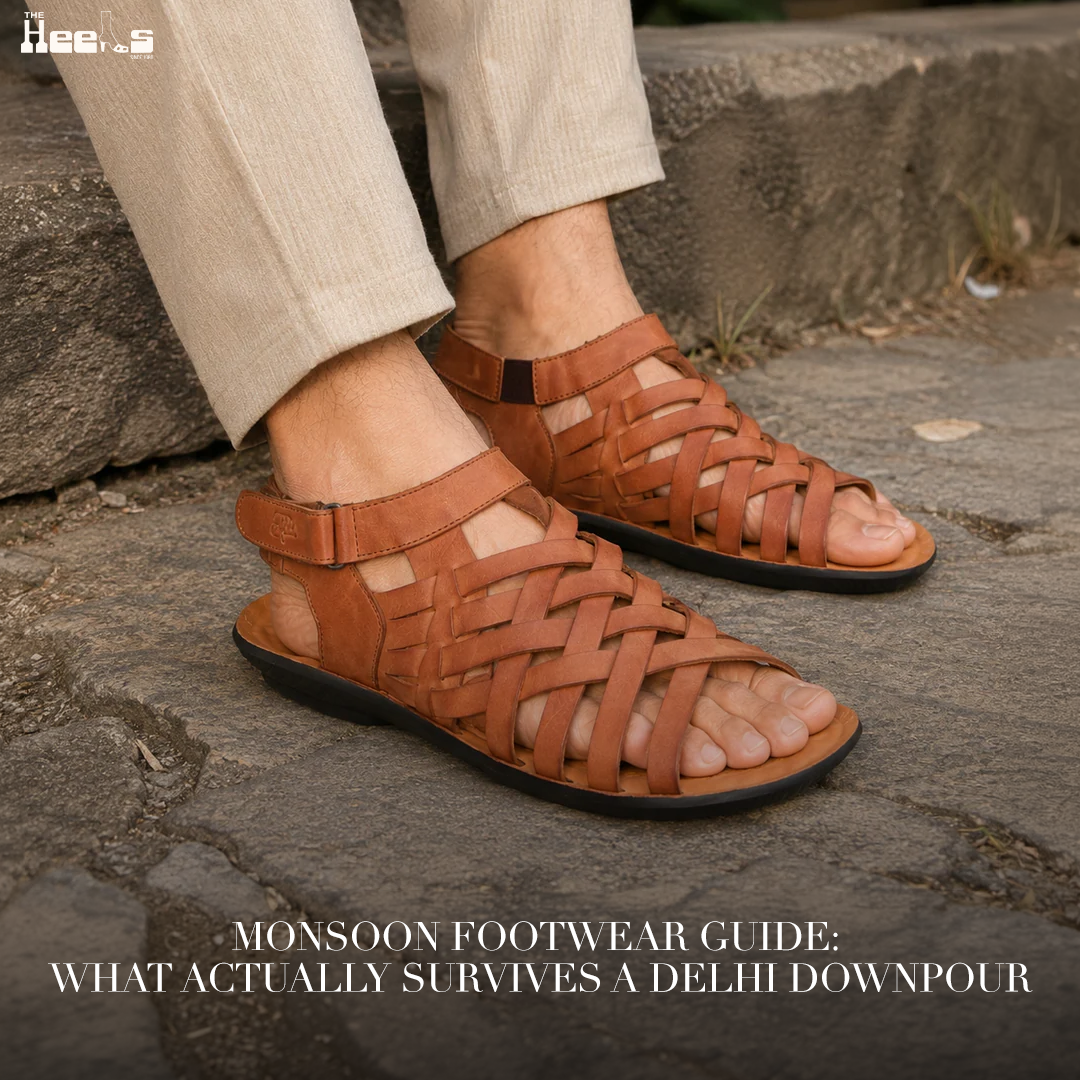
2. Kolhapuris and open-back ethnic styles — same principle, dressier
3. Closed leather shoes — only on dry days, only with a plan
4. Canvas or fabric sneakers — the worst thing you can wear. Absorbs everything, dries in two days, smells by day one
For Men: The Three-Pair Monsoon Kit
The everyday pair. A leather slider you can wear to the shop, to the metro, to a friend's place, and not care what happens to it. Our Bravur Leather Sliders are the pair most men in Delhi end up living in through August — single broad strap, cushioned footbed, nothing to soak.
The all-day pair. If you're walking a lot — commuting, site visits, market runs — you want a footbed with actual cushioning and a strap system that holds the foot in place when the sole is wet. The Declan Leather Velcro Cushion Slippers and Brunel Velcro Roman Sandals both adjust, which matters more than it sounds: feet swell in humidity, and a fixed-width strap that fits at 9 AM will be cutting in by 4 PM.
"I still have to look presentable" pair. This is the gap most men have. You have a meeting, it's pouring, and sliders won't do. The answer is a structured leather sandal that reads closer to a shoe — Renzo Multi Leather Cushion Sandals or Sirocco Leather Strappy Sandals in tan. Neither looks like beachwear, both survive a downpour.
For Women: The Problem Is Grip, Not Water
Women's monsoon footwear has a different failure mode. The water isn't usually the issue — the surface is.
Delhi buildings are full of polished marble and vitrified tile. Add water tracked in from outside, and the coefficient of friction drops off a cliff. Most of the slips we hear about happen indoors: a mall entrance, an office lobby, a wedding venue, the four steps into a restaurant.
What actually helps:
● A textured sole, not a smooth one. Turn the shoe over. If the underside is flat and shiny, it will slide on wet marble. You want visible tread or a rubberised surface.
● A back strap or an elasticated back. Slip-ons that stay on by friction alone stop staying on when your foot is wet. Gitano Flat Back Elastic Sandals solve exactly this.
● Lower and wider. A block heel is far safer on wet ground than a stiletto, and a wedge is safer still. This is not the season for a thin heel on cobblestone.
● Cushioned sliders for the short runs. Abigail Cushioned Sliders for the school run, the market, the terrace.
If you must wear a closed shoe — an office with a dress code, a formal meeting — carry it. Wear sliders in transit, change at your desk. Half of corporate Delhi already does this and nobody thinks twice about it.
What to Put Away Until October
Be honest with yourself about these:
|
Keep in the Cupboard |
Why |
|
Suede and nubuck, anything |
Water marks are permanent. Not "hard to remove" — permanent. |
|
Canvas and fabric sneakers |
Absorbs, holds, smells. Takes 48 hours to dry properly. |
|
Light tan or cream leather |
Muddy splashback stains and won't fully lift. |
|
Anything with a smooth leather sole |
Zero grip when wet. Genuinely dangerous on marble. |
|
Your best formals |
One bad day ends them. Wear the second-best pair. |
The Dry-Day Strategy for Closed Shoes
You can't wear sandals to court, to a hospital, or to a client meeting. So on dry monsoon days when you do wear leather:
Treat them before, not after. A leather conditioner applied the night before creates a barrier that buys you an hour of protection. Helios Leather Lotion takes two minutes to apply.
Carry a second pair in a bag. Unglamorous and completely effective.
If they do get soaked — and this is the part everyone gets wrong — never dry them near heat. No fan on full, no heater, no sunlight, absolutely no hairdryer. Stuff them tightly with newspaper, change the paper after two hours, and leave them in a shaded, ventilated corner for a full day. Heat is what cracks leather, not water.
We've written a full guide to monsoon leather care if you want the detail.
One Thing Worth Spending On
If you buy one thing for the monsoon, make it a properly cushioned sole rather than a "waterproof" upper. Here's why: through July and August you will walk further, on worse surfaces, in wetter conditions, than at any other time of year. Delhi pavements in monsoon are uneven, and the impact goes straight into your knees and lower back.
A ₹2,000 slider with a moulded, cushioned footbed will do more for you across two months than a ₹5,000 shoe that claims to be waterproof and isn't.
[IMAGE 4 — Close-up of a cushioned footbed and textured sole, side-on, natural light. ALT: Cushioned leather footbed and textured anti-slip sole on monsoon footwear]
Come and Check the Sole
Grip is impossible to judge online. If you're in Delhi NCR, come to the Connaught Place shop and turn the shoe over — thirty seconds of looking at a sole tells you more than any product photograph.
Outside NCR, and unsure? Message us before you order. We'll tell you honestly whether a particular sole is going to hold on wet tile, including when the answer is no.
Common Questions
Are leather sandals okay in the monsoon?
Yes, and they're the best option. Leather that gets wet on an open sandal dries on your foot within minutes and is fine, provided you condition it occasionally. The problem is leather trapped inside a closed shoe with nowhere to dry.
What's the best footwear for walking in the rain in India?
An open leather slider or strappy sandal with a cushioned footbed and a textured sole. Open construction so water drains, cushioning because you'll walk more on worse surfaces, texture for grip on wet marble and tile.
Can I wear sneakers in the monsoon?
Leather sneakers on a dry day, if you condition them first and accept the risk. Canvas or fabric sneakers, no — they hold water for days and develop odour almost immediately.
How do I stop my feet smelling in the monsoon?
Rotate pairs so no shoe is worn two days running, choose open styles so feet stay dry, and never put a damp shoe straight into a cupboard. Ventilation solves most of it.
How do I dry wet leather shoes?
Newspaper inside, changed after two hours, then air-dry in shade for 24 hours. No direct heat of any kind. Once fully dry, apply a leather conditioner — drying strips the natural oils out.